



What are Primitive reflexes?
Primitive reflexes are natural, automatic movements that start to develop in utero and are present in early infancy. Ideally the development of a child's brain and the emergence and integration of primitive reflexes follow a sequential and predictable sequence, setting the foundations for further development and learning. Originating in the brainstem, primitive reflexes help babies feed, respond to their environment and begin developing early movement patterns.
As the nervous system matures primitive reflexes usually integrate within the first six to twelve months and are replaced by more controlled movements, supporting postural stability, balance, coordination, vision and learning as the midbrain and limbic systems develop. This central nervous system development in the first years of life involves the sequential integration of primitive reflexes as postural reflexes take front stage. Primitive reflexes don't entirely disappear but become inhibited as higher centres of the brain mature.
When primitive reflexes integrate as expected, they create a stronger foundation for learning and everyday function. If they remain active for longer than expected, they are described as retained, providing indicators of neuromotor immaturity which may be linked to challenges such as motor skills and postural control, attention, balance, coordination, vision, sensory processing and learning.
Examples of some Primitive Reflexes and some possible impacts if retained.
Moro reflex (infant startle reflex)
The Moro reflex is an early survival reflex. Triggered by sensory stimuli a baby responds to a sudden change in movement, position, light or sound by extending the arms and legs, taking a quick breath in and then drawing their arms and legs back in. Crying may also occur. This reflex is often referred to as the 'fight or flight' reflex.
As a child's development progresses, the Moro reflex usually integrates and is replaced by a more mature startle response.
However, if the Moro reflex remains active, it may be linked to heightened sensitivity to noise or movement, increased alertness, anxiety, distractibility, poor stamina, emotional or anger outbursts or difficulty maintaining attention in busy learning environments.
Palmar grasp
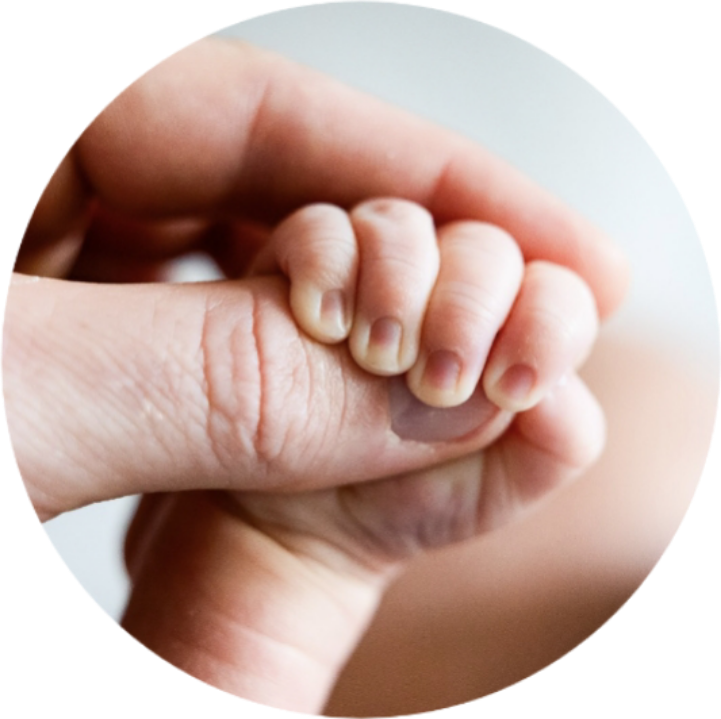
The Palmar grasp reflex is triggered by touch causing a baby to involuntarily close their hand around a finger or object placed in the palm. This reflex prepares the child for later voluntary grasping and early development of hand-eye coordination.
As the Palmar grasp reflex integrates, more mature, deliberate hand control required for later writing, drawing and fine motor manipulation of objects takes over.
If retained, the Palmer grasp reflex may affect a child's pencil grip, difficulties with handwriting, hand fatigue, hypersensitive palms, or poor fine motor skills and control.
ATNR (Asymmetrical Tonic Neck Reflex)
The ATNR is initiated when a baby turns their head to one side, the arm and leg on that side extend while the opposite side bends. This occurs for example when the baby is placed on their tummy and their head turns to one side, freeing up the airway for breathing.
The ATNR helps to develop differentiated movements on either side of the body and is involved in training early hand-eye coordination and early visual tracking. The ATNR should gradually integrate as neck muscles grow stronger, head control improves and visual abilities further develop.
If retained, the ATNR may be linked to difficulty crossing the midline (reaching across the body with the opposite hand), visual tracking, reading or writing across a page, reading comprehension difficulties, unusual sitting posture when writing, balance and coordination challenges or difficulties with sports such as gross and fine motor skills.
STNR (Symmetrical Tonic Neck Reflex)
The STNR divides the body into top and bottom. When the head moves up or down, the arms and legs respond in opposite ways, therefore when the head is lifted there is an extension of the limbs in the upper body and flexion in the lower body and when the head is lowered there is flexion in the upper body and extension of the lower limbs.
The STNR assists in building the body's capacity to move the top and bottom parts of the body independently, helping prepare for coordinated crawling movements, pulling themselves from hands and knees to standing, posture and balance. The STNR may also plays a role in visual perception and the ability to shift focus between near and far.
If retained, the STNR may be associated with poor (slumped) posture, difficulty sitting still, W leg position when sitting on the floor, challenges with oculomotor skills such as copying from the board, fidgeting, muscle weakness or gross motor challenges. Given the difficulty for the child to sit still, requiring constant movement, this reflex is sometimes associated with ADHD like behaviours.
TLR (Tonic Labyrinthine Reflex)
The TLR is a response to changes in head position, influencing the baby’s overall muscle tone, posture, balance and movement. When the head tilts back, the body tends to extend. When the head tilts forward, the body tends to curl inward.
As postural control, head righting reflexes and muscle tone develop, the TLR is usually inhibited, allowing movement and balance to become more coordinated. This may take up to three and a half years.
If retained, the TLR may be linked to balance difficulties, slumped posture, visual-spatial awareness challenges, easily fatigued, clumsiness or discomfort during seated learning tasks, toe-walking, find stairs difficult or have trouble navigating spaces confidently.
Spinal Galant Reflex
The Spinal Galant reflex is initiated when the skin along one side of the lower back is touched, the hip flexes and the spine curves toward that side.
If retained, it may be associated with reduced concentration, fidgeting, difficulty staying seated or preferring to sit on knees, sensitivity to the back of a chair or around the waistband of clothing. Bedwetting in childhood (beyond 5 years) may also be an indicator.
These are just a few examples linked to some of the may reflexes associated with child development. There are many more primitive reflexes, each of which plays a role in early development and is expected to integrate as a child’s nervous system matures, usually within the child's first six to twelve months, although as mentioned, the TLR may take up to three and a half years to fully integrate.